
Flipkart, the e-commerce company owned by Walmart, is intensifying its efforts to achieve profitability as it is eyeing a valuation of approximately $60 billion at the time of its initial public offering (IPO), now planned in 2025-2026, instead of this year, according to people familiar with the matter. The firm might consider listing in the US or any other geography, including India. The company, which counts the likes of Amazon and Reliance's JioMart among its competitors in India's burgeoning e-commerce market, had also contemplated launching an IPO in 2022-2023.

Mutual funds (MFs) are likely to surpass foreign portfolio investors (FPIs) in terms of anchor investments in initial public offerings (IPOs) for the second consecutive year. In calendar year 2023 so far, MFs have invested Rs 5,577 crore as anchor investors, compared to the Rs 5,417 crore invested by FPIs this year. In 2022, MFs put in Rs 9,026 crore as anchor investment, 21 per cent higher than the FPI tally of Rs 7,105 crore. This marked the first time since 2014 that MFs had outpaced FPIs in anchor investments.

Of the 59 IPOs for which the data is available, 36 IPOs received mega responses of more than 10x (of which, six IPOs more than 100x), while eight IPOs were oversubscribed more than 3x.

The Rs 6,145-crore initial public offer of electric two-wheeler company Ola Electric Mobility got fully subscribed on the second day of bidding on Monday, driven by demand from retail investors and non-institutional investors. The initial share sale received bids for 49,43,63,610 shares against 46,51,59,451 shares on offer, translating into 1.06 times subscription, according to the NSE data.

The Insurance Regulatory and Development Authority of India (Irdai) has asked at least 10 general and life insurance companies to submit a detailed road map for their listing strategies by the end of this month, according to multiple sources with direct knowledge of the matter. "The regulator met four life and six general insurers last month and asked them to provide their listing strategies by the end of February," said one of the sources.

'The IPO window has been more or less open since the new government in 2014.'

'The deal pipeline across products is robust for 2024.'
While most investors brush off NFOs like spam, some of them offer solid opportunities, especially when you know what to look for. So let's clear the confusion around NFOs and figure out when they're worth your money, and when they're not.

The primary market will see a flurry of activity in March, with at least three companies including Gopal Snacks will float their initial public offerings (IPOs) in the upcoming week to raise Rs 1,325 crore collectively. The other two companies which are set to launch their maiden public issues are -- RK Swamy and JG Chemicals. Additionally, Bengaluru-based luxury furniture brand Stanley Lifestyles and Krystal Integrated Services are expected to float their initial share-sales later this month, according to merchant bankers.

Experts said the 20 per cent drop in the market poses a challenge for companies that have set the ball rolling on their IPO plans as valuations will now have to realign. This could entail more dilution or lowering of the issue size.

It has been a slow 2022 thus far for the primary markets. In the last 8 months, only 16 companies have raised Rs 40,311 crore via the initial public offer (IPO) route, data from PRIME Database suggests. In comparison, 63 companies had raised a cumulative Rs 1.18 trillion via the IPO route in 2021. A large part of the funds raised in 2022 were on account of the two IPOs - Life Insurance Corporation of India (LIC) and logistics firm Delhivery - that raised a total of over Rs 26,000 crore between themselves.
In the current calendar year, small and medium enterprises (SMEs) have witnessed an impressive surge in initial public offerings (IPOs), surpassing the 2018 record. Over 150 SME IPOs have been introduced to the market, breaking the previous record of 141 set in 2018. According to data from PRIME Database, a primary market tracking firm, 147 companies successfully concluded their debut share sales by the end of October, raising a cumulative Rs 3,727 crore.

Madhabi Puri Buch, the first female chairperson of Sebi, doesn't plan to rest on her laurels in her third and final year in office and has set out an ambitious goal, such as moving towards a same-day and instantaneous settlement cycle for the secondary market.

Fresh capital raised by companies by way of initial public offerings (IPOs) is set to hit a 14-year high, thanks mainly to Zomato's maiden offering. India Inc has raised about Rs 19,300 crore in fresh capital by maiden offerings, including the Rs 9,000 crore the food delivery company will raise this week, so far in 2021. The best year in terms of fresh fund-raise was 2007, when companies had raised Rs 32,102 crore. With Paytm planning to issue fresh shares worth Rs 12,000 crore, the domestic market looks set to surpass that tally this year.

Monte Carlo has raised a little above Rs 100 crore (Rs 1 billion) from anchor investors at Rs 645 a share.

Capital markets are becoming more prominent in India's growth story, with an expanding share in capital formation and investment landscape on the back of technology, innovation and digitisation, according to the Economic Survey 2023-24 tabled in Parliament on Monday. Further, Indian markets are resilient to global geo-political and economic shocks, it added. "Despite heightened geo-political risks, rising interest rates and volatile commodity prices, Indian capital markets have been one of the best performing among emerging markets in FY24," the Economic Survey said.
Eleven companies have launched their initial public offerings (IPOs) in December 2023, making this month the second-best December for public offerings since 1996. Collectively, they are raising Rs 8,182.7 crore this month. In December 2021, 11 companies raised Rs 9,534 crore. However, excluding December 2021, this month marks the best December for IPOs since 1996.
Capital markets regulator Sebi has kept in 'abeyance' the proposed initial share sale of securities depository NSDL. However, the Securities and Exchange Board of India (Sebi) did not clarify further. The National Securities Depository Ltd (NSDL) filed its preliminary papers with the capital markets regulator on July 7.

The National Stock Exchange of India (NSE), which is still awaiting regulatory approval for its initial public offering (IPO), is now planning to streamline the process of buying the unlisted stocks of the company, thereby reducing the time taken for such deals from about four months to just a week. The management of India's biggest stock exchange has affirmed that it is working to reduce the time taken. According to the analysts, certain approvals required at present from NSE for buying stocks, are adding to the processing time.

Foreign portfolio investors (FPIs) have invested Rs 25,300 crore through the anchor book for IPOs in 2024, surpassing the Rs 20,351 crore invested by domestic mutual funds (MFs). FPIs accounted for 46.6 per cent of shares sold in the anchor category, the highest share since 2021, according to PRIME Database.

Fundraising via initial public offers (IPOs) dropped 52.2 per cent to $147.2 billion in the first eight months of calendar year 2023 (CY23), suggests a recent report by GlobalData, a London-based analytics and consulting company. At the country level, the report suggests, India topped the charts with 152 transactions worth $3.8 billion during this period, primarily due to a higher number of SME IPOs, followed by the US with 99 deals totaling $16 billion, while China ranked third with 88 transactions worth $32.3 billion. "An analysis of GlobalData's Deals Database reveals that there were 750 IPO listings registered with an aggregate deal value of $147.2 billion in the first eight months of 2023 on the stock exchanges worldwide.

The Securities and Exchange Board of India (Sebi) plans to mandate the UPI block mechanism, also known as the ASBA-like facility, in the secondary market for Qualified Stock Brokers (QSBs). QSBs are brokers with larger client sizes and thus more significance in the market ecosystem.

At least 11 firms have called-off their Initial Public Offer (IPO) plans since the beginning of 2012, even as the country's largest commodity exchange MCX today made a stellar debut in the stock market after a highly-successful IPO last month, a report has said.
Water projects firm Vishnu Prakash R Punglia, the 20th company to launch its IPO in the current year, saw its shares closing at a 47 per cent gain over its issue price on Tuesday. Such a huge one-day pop is considered rare; however, it has become the norm this year. The average listing-day gain for these 20 IPOs in 2023 is 34 per cent, and their average gain to date stands at 46 per cent.

Shares worth over Rs 50,000 crore (or approximately $6 billion) are set to become freely tradable between now and April 10. Historically, such substantial volumes have been absorbed by a buoyant block-deal market.

Financial year 2010-2011 saw high wealth erosion for investors in the IPO market.
More companies are harbouring aspirations to go public, following a sharp market rebound after June's nadir. In August, seven companies expecting to raise a cumulative Rs 10,425 crore filed their draft red herring prospectus (DRHP) with the Securities and Exchange Board of India (Sebi). The amount they are looking to mop up is the highest since March, when 13 companies filed their DRHPs to raise a combined Rs 19,494 crore, reveals data provided by PRIME Database - a source of comprehensive information on all capital market offerings.

Expect corporate houses to raise funds via IPO in second half of this year.

The dull overall scenario in the stock market seems to have hit the initial public offers (IPOs). In a first this year, there are no IPOs lined up for this month.
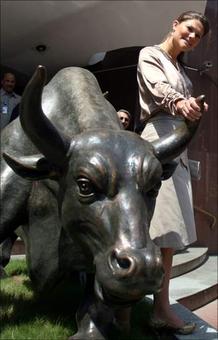
This article will try to give some tools and ratios, which help us decide whether to invest in an IPO or not at any time!
Strong performance of past IPOs spurred investors' interest, with 87 small and medium enterprises (SMEs) garnering Rs 1,460 crore through initial share-sales in the first nine months of the year. This was way higher than 56 companies that had raised Rs 783 crore through initial public offering (IPO) in the entire 2021, the industry data showed. Further, the remaining part of the year 2022 can see more mature companies accessing the platform.
The government is likely to file draft papers for the mega initial public offering of LIC with market regulator Sebi by next week, while a portion of the issue would be reserved for anchor investors, a top official said on Wednesday.

Weakness in the broader markets, along with expensive valuations that these companies had commanded during their IPOs, has led to this fall

Food delivery major Swiggy has received approval from its shareholders for a $1.25 billion initial public offering (IPO), according to filings made with the Registrar of Companies sourced by Tofler. The Bengaluru-based firm plans to raise as much as Rs 3,750 crore (around $450 million) via a fresh issue and up to Rs 6,664 crore (around $800 million) through an offer-for-sale (OFS) component, the filings stated.

Zetwerk Manufacturing, a $3.1 billion company in the contract manufacturing space, is planning to come up with an initial public offering within the next 15-24 months, a top company executive said on Saturday. The Bengaluru-based company aims to raise at least $500 million, targeting a valuation of around $5 billion.

Bharti Airtel sees opportunity in raising tariff for data services as it feels that rich are paying less and poor are not required to pay anymore, a senior official of the company said. During the company's earnings call for the first quarter of the current fiscal, Bharti Airtel vice-chairman and MD Gopal Vittal said that the company has written to the government for a relief on adjusted gross revenue and has demanded that it should be given benefit at par with other telecom operator, without naming Vodafone Idea.

The fees charged by investment banks to manage initial public offerings (IPOs) have increased to an average 3.23 per cent of the issue size this calendar year, the highest since 2020. The average fee is up 8 per cent compared to last year, when it stood at 2.99 per cent. The investment banking fees have increased as the average IPO size has shrunk this year.
Investor confidence in unlisted shares was shaken after recent developments that saw online drugstore PharmEasy issuing new shares in a rights issue at a 90 per cent discount to its previous valuations and Reliance Retail's move to buy back and cancel shares held by public investors. Both stocks were, at one time, very popular in the unlisted market, with canny investors cornering them with the objective of benefiting from their listing. "Since investors have suffered losses on both counts, they will be careful when it comes to dealing in shares of unlisted companies," observes a broker dealing in unlisted shares, adding that there will be some rationality to the pricing.
